
Description
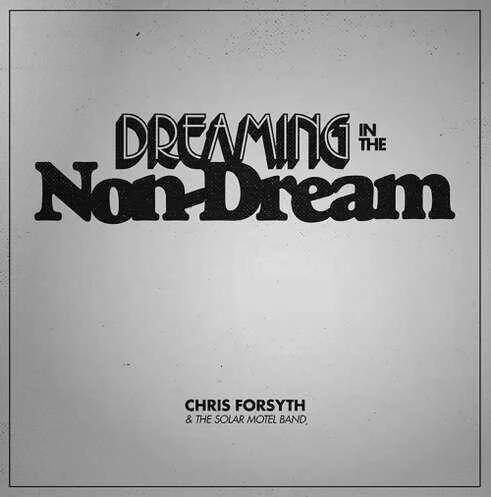
The idea that rock music ever pretended to promise transcendence is ridiculous, or at least it seems so under present conditions. Leaving aside the obvious question even (transcendence of what?), the idea seems archaic, optimistic in a way thats hard to access in the Trump/Brexit era. Chris Forsyths music is too kinetically aware, too intelligent and frankly too goddamn punk to make any such outsized promises but also nearly impossible to hear without considering the idea. Because as sure as Dreaming In The Non-Dream is subject to all the dread pressures that have contorted us all of late it would be a drab mistake to call this a political record but also straight-up lazy to miss its subtle cues. Its a record that conveys ecstasy as surely as Pharoah Sanders does, or the Velvet Underground did.
In this respect, its hard to imagine who Forsyths contemporaries might be. Its always been this way: the greats tend to feel a little out-of-plumb with their moment (only hindsight lets us see it otherwise) and Forsyths music has been sparring with some large forces from the beginning. Hes always united the homely with the astral, the abstract with the visceral in his Solar Motels and Intensity Ghosts. Theres something different about Dreaming In The Non-Dream, though. Theres a fresh economy involved here, a sense of not a note wasted.
Despite psychedelic leanings, Forsyths records have always trained toward concision plenty of space, yet never slack but these tunes erupt with startling swiftness, then spend the rest of their quick-burning lives teasing multiple moods and patterns out of relatively simple materials.
History & Science Fiction pads in on the back of a slinky, almost shy, bassline, then after a little blast of glassy percussion hurls us about a mile into the air before arriving, startlingly, at a saxophone arrangement that evokes early Roxy Music.
The title track seems to gene-splice two of the great minimalist themes, Pere Ubus Heart Of Darkness and Neus Hallogallo, into one surging, winding, pulsing ride.
Even the pensive, aqueous Two Minutes Love, which sounds a bit like something Ry Cooder couldve written for the Paris, Texas soundtrack troubled by ghosts both placid and deranged, does a lot with barely more than a whisper.
Two Minutes Love inverts Orwells Two Minutes Hate from 1984.
Its Have We Mistaken The Bottle For The Whiskey Inside? thats most explicit. Over a prowling, stabbing, Stones-ish backdrop one that, naturally, will accelerate itself into something different Forsyth sings about transcendence: about los(ing) my senses and the suspension of self-judgment, about the gaps between ideation and execution and, of course, between container and content.


Reviews
There are no reviews yet.