Description
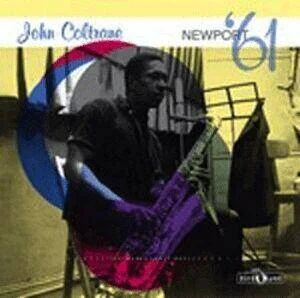
Recorded at Music at Newport festival 1961 on Saturday night July 1st John Coltranes previously unissued 1961 performance at the Newport Jazz Festival. At the time, his group consisted of a quintet with Trane as the only horn, plus piano, two basses, and drums.
The Newport tracks feature: McCoy Tyner on piano, Reggie Workman and Art Davis on bass, and Elvin Jones on drums Live at Newport, Rhode Island, July 1, 1961. In May 1961, Coltranes contract with Atlantic was bought out by the newly formed Impulse! Records label. An advantage to Coltrane recording with Impulse! was that it would enable him to work again with engineer Rudy Van Gelder, who had taped both his and Daviss Prestige sessions, as well as Blue Train. It was at Van Gelders new studio in Englewood Cliffs, New Jersey that Coltrane would record most of his records for the label. By early 1961, bassist Davis had been replaced by Reggie Workman while Eric Dolphy joined the group as a second horn around the same time. The quintet had a celebrated (and extensively recorded) residency in November 1961 at the Village Vanguard, which demonstrated Coltranes new direction. It featured the most experimental music hed played up to this point, influenced by Indian ragas, the recent developments in modal jazz, and the burgeoning free jazz movement. John Gilmore, a longtime saxophonist with musician Sun Ra, was particularly influential; after hearing a Gilmore performance, Coltrane is reported to have said Hes got it! Gilmores got the concept! The most celebrated of the Vanguard tunes, the 15-minute blues, Chasin the Trane, was strongly inspired by Gilmores this period, critics were fiercely divided in their estimation of Coltrane, who had radically altered his style. Audiences, too, were perplexed; in France he was famously booed during his final tour with Davis. In 1961, Down Beat magazine indicted Coltrane, along with Eric Dolphy, as players of Anti-Jazz in an article that bewildered and upset the admitted some of his early solos were based mostly on technical ideas. Furthermore, Dolphys angular, voice-like playing earned him a reputation as a figurehead of the New Thing (also known as Free Jazz and Avant-Garde) movement led by Ornette Coleman, which was also denigrated by some jazz musicians (including Miles Davis) and critics. But as Coltranes style further developed, he was determined to make each performance a whole expression of ones being.
Line up:
John Coltrane: Tenor & Soprano Sax
McCoy Tyner: Piano
Art Davis: Bass
Reggie Workman: Bass
Elvin Jones: Drums
Reviews
There are no reviews yet.