Description
After spending three years honing his craft at the prestigious London Centre Of Contemporary Music, Lewis signed to Decca in 2016. Lewis had inked the label deal on the back of a promising collection of retro-soul demos. I recorded an album that was very much in a soulful, jazzy vein, but I stepped away from it as I knew it wasnt who I really was.
Decca gave Rhys the space to scrap the album and start again an uncharacteristic luxury in the music world of today, which can often feel driven by instant gratification. The only song to survive the Marie Kondo-ing was the heart-wrenching, breakup track, No Right To Love You which incidentally was the song Decca signed Rhys on the back of.
Following the decision to begin again with his music, Rhys also ended a romantic relationship that wasnt working. I did the right thing, he says, but I felt a lot of guilt for that. He then started working with Aidan Glover, the keyboardist and producer he shares a studio with today. These events were the necessary reset from which Lewis re-emerged fully reinvigorated.
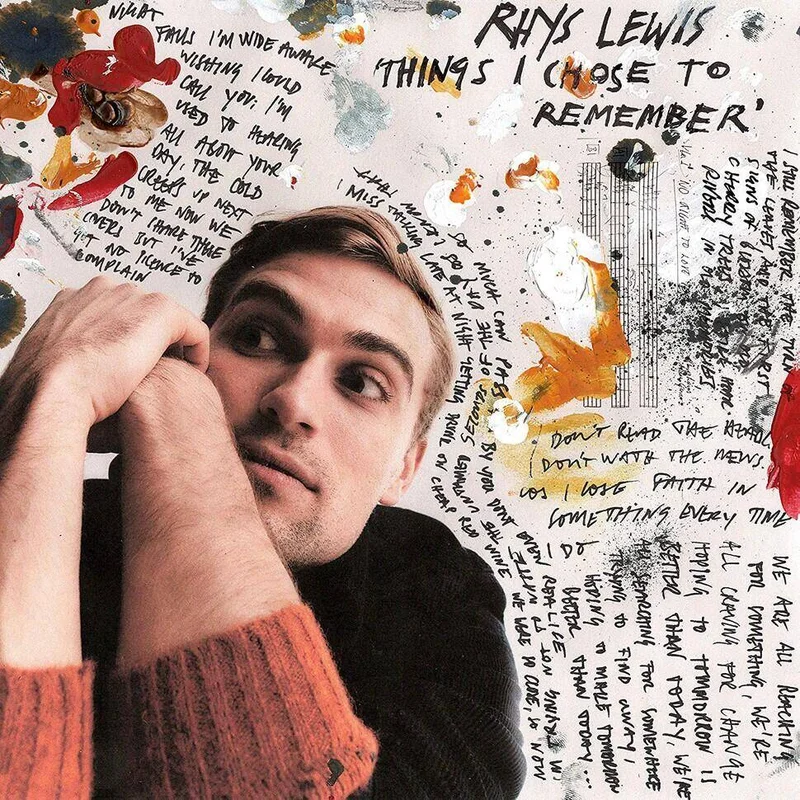
That desire to be present is at the root of Things I Chose To Remembers emotional heft. Lewis recorded the album on analogue tape, a rare and expensive process thats barely been used since the early 80s. This process comes with both limitations and joys, for instance, its common to have over 100 individual tracks in a contemporary pop song. Yet with his 24-track tape machine Lewis limited himself to just two-dozen. Everything had to earn its place, he says. We worked the songs and the productions much harder, and I think we questioned things much more because of it.
Things I Chose To Remember is a testament to an artists unleashed creativity, and stands as Lewiss most inventive and exploratory music to date. The use of synthesizers adds a looming, apocalyptic feeling to the albums soaring closer What Wild Things Were, a vivid eco-conscious elergy to our burning planet which imagines mass animal extinctions, and was inspired by the American journalist David Wallace-Wellss book-length imagining of the dire effects of climate change, The Uninhabitable Earth.
Lewis is a fundamental optimist, as evidenced by his heartbreaking 2019 ballad Better than Today, an impassioned plea for us to find common ground in a world that often feels politically cleaved down the middle. I was deeply saddened by the Trump and Brexit chapter in politics, he goes on. It showed how disenfranchised everyone felt, and also how misunderstood we feel not just with politics, but with each other.
Under The Sun is a bright guitar-pop gem which begs for mass-singalongs at a summer festival, and What If is a soaring mea culpa in which Lewiss singing voice goes full-belt against swelling strings. Meanwhile, the gospel-inspired drama of Lonely Place is heralded by the rhapsodic sound of a full choir which is actually Lewis vocals filtered and effected.
Most days now, Lewis will get up before dawn and walk an hour in Highgates serene Waterlow Park, before sitting down for breakfast at a tucked-away nearby cafe with just a good paperback for company. A recent favourite was philosopher Bertrand Russells 1930 lifestyle manifesto The Conquest of Happiness, which inspired the carpe diem message of Lewis uplifting 2019 single Hold On To Happiness.
Lewis has announced a run of April in-store performances which follow his sold out 2019 UK tour which included Londons EartH. Lewis also supported Julia Michaels worldwide. (Aus, EU & US).
Lewiss songs gleam like a rough-cut gem, and 2020 promises great things for this humanist-troubadour whose singular music deserves to be around for a very long time.
Reviews
There are no reviews yet.